
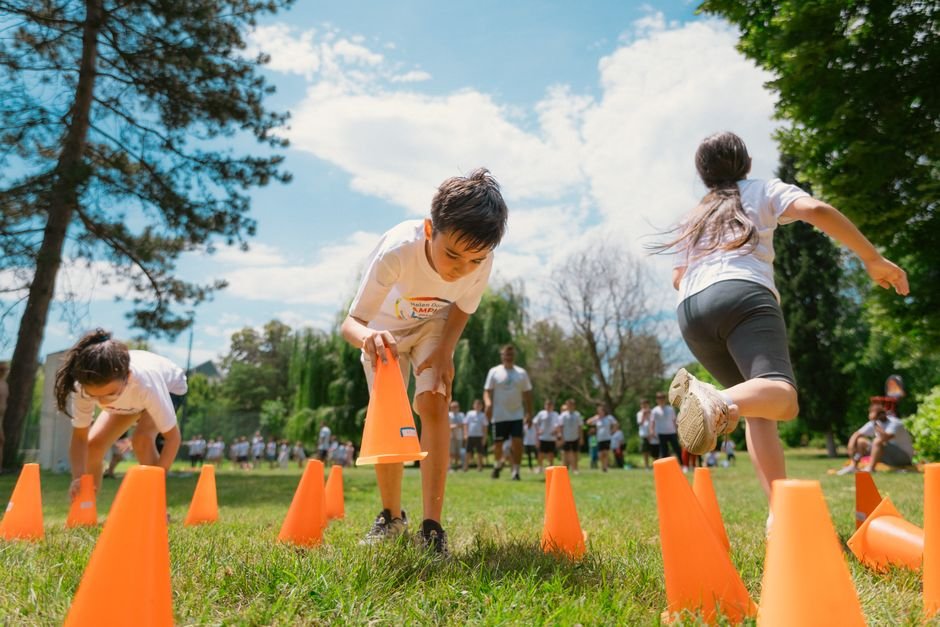
You don’t need a gym membership or a therapist’s checklist for good physical development activities — most of it happens through the regular stuff, running around and getting their hands into things. Here’s what to try, and what it’s quietly building.
Backyard (or Living Room) Obstacle Course
Ages 3–8 · 15 min setup + play · Gross motor
Couch cushions to crawl over, a broom laid flat to balance-walk along, a hula hoop to jump into — string together whatever you’ve got lying around into a little course, then time them (or don’t, if timing turns it into a meltdown risk).
Why it works: Balance, coordination, and body awareness all get a workout here, and it scales up or down instantly — add a step for an 8-year-old, simplify it for a wobbly 3-year-old.
Playdough Squeeze & Roll
Ages 1–5 · 15–20 min · Fine motor
Just playdough, no agenda — rolling, pinching, squeezing between fingers. Add a plastic knife or a garlic press for older toddlers who want a “job” to do with it.
Why it works: This is exactly the kind of physical development activity that builds real hand strength — the same strength that eventually holds a pencil properly. It looks like nothing, but it’s genuinely doing something.
Want more? See Learning for cognitive, behavioral, and education-focused activities too, or our Grandparent Guides for tips on handling the trickier parenting moments. For a deeper look at what’s typical by age, the CDC’s developmental milestones guide is a solid reference.